Overview
Summary
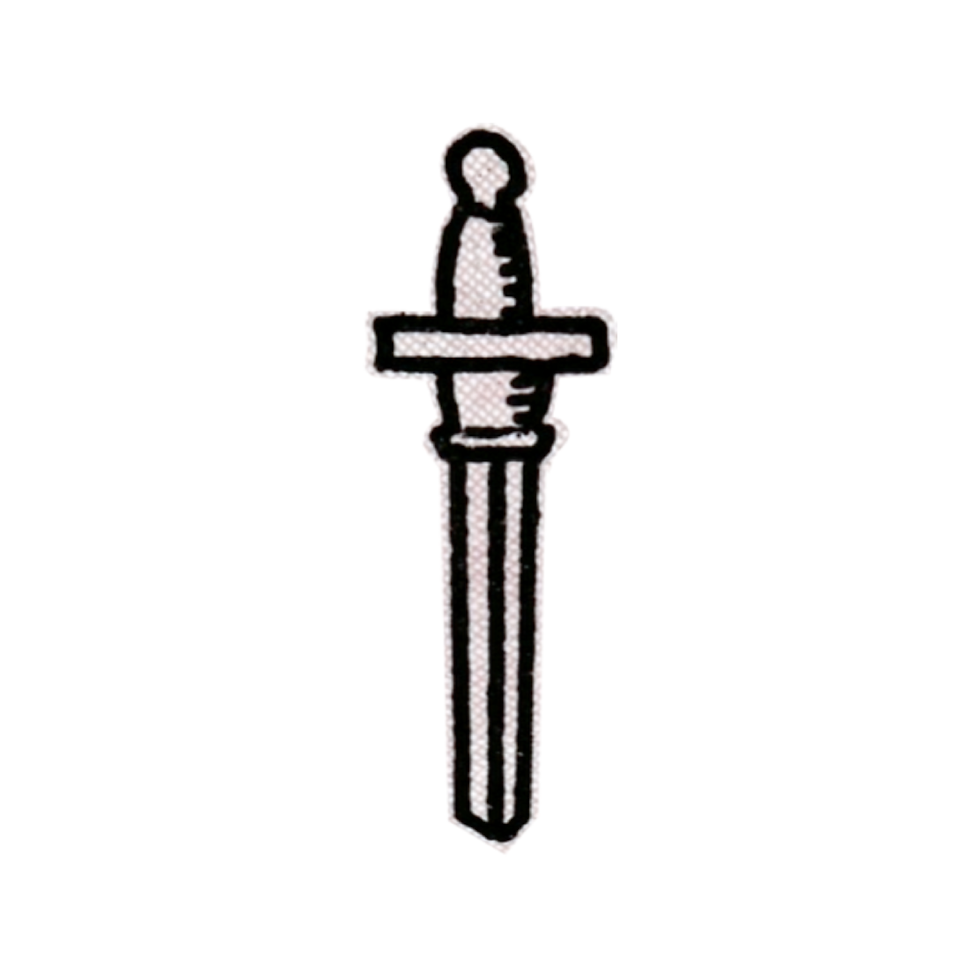
Swords speaks to thought, communication, and decisions.
Main Points
Swords is one of the four suits of the Minor Arcana.
It contains 14 cards, ranked Ace through King.
Swords focuses on thought and perception: truth, communication, and decisions.
It often highlights clarity, conflict, and the consequences of the mind.
Number of Cards
14
Card Attributes
=
=
=
=
=
=
=
=
Introduction
Swords is the suit of the mind. It highlights how we think, speak, interpret, and decide—clarity versus confusion, honesty versus distortion, discernment versus avoidance.
In readings, Swords often points to communication, boundaries, conflict, and the need to see things as they are. It asks what is true, what is being believed, and what must be named clearly in order to move forward.
About
Swords concerns intellect, reasoning, language, and perception. It reflects the mental frameworks we use to interpret experience and the stories we tell about what is happening. Swords asks clear questions about truth, ethics, responsibility, and the consequences of thought and speech.
At its core, Swords is about clarity. It shows how understanding can illuminate and how misunderstanding can divide. It reminds us that the mind is a powerful tool—shaping reality through attention, belief, judgment, and communication.
Interpretation
Core Correspondences
Swords is associated with the element Air, symbolizing clarity, movement, and mental activity. Its energy is inward-facing, directed toward thought, reflection, and interpretation. It is traditionally considered masculine, emphasizing assertion, analysis, and distinction.
Swords relates to the intellectual mind: reasoning, communication, judgment, and ethical discernment. In playing-card terms, it is often linked with Spades.
Together, these correspondences describe an energy that seeks understanding through clarity and differentiation.
How Swords Shows Up in Life
Swords appears in situations involving communication, learning, planning, conflict, decision-making, and ethical concerns. It often reflects questions about truth, fairness, boundaries, responsibility, and the impact of words and ideas.
In everyday life, Swords energy is present when attention turns toward problem-solving, debate, negotiation, analysis, or making difficult choices. It highlights the role of perspective and the effect beliefs, assumptions, and language have on experience.
Reading Swords in Context
When a Swords card appears, the situation is shaped primarily by thought patterns and communication. Key issues often involve clarity, honesty, boundaries, or the need to face difficult truths.
Swords often invites questions such as:
What story is being told or believed here?
How are thoughts or words influencing the situation?
Where is clarity needed, and where might distortion exist?
In single-card and small spreads, Swords often points to clear thinking, direct communication, and careful discernment.
Balance and Imbalance of Swords Energy
In balance, Swords energy is clear, insightful, and principled. It supports truth, fairness, and intellectual integrity. When imbalanced, it can become overly critical, rigid, anxious, or disconnected from feeling and embodiment. Too much reliance on intellect can lead to conflict or alienation, while too little can result in confusion or avoidance.
Swords is strengthened by the grounding of Pentacles, the emotional awareness of Cups, and the motivating force of Wands.
Organization and Structure
How the Suit is Organized
The Swords suit contains fourteen cards: ten numbered cards (Ace through Ten) and four court cards (Page, Knight, Queen, King). The numbered cards often describe mental and communicative development—clarity, tension, truth, conflict, strategy, resolution—while the court cards describe styles of thinking and speaking through learning, pursuit, maturity, and authority.
A Clarity Lens
Because Swords is rooted in Air and mental perception, this suit is especially useful for reading themes like communication, boundaries, decision-making, conflict, ethics, and the difference between truth and assumption.
Related Concepts
How Swords Relates to the Other Suits
Compared to Cups, Swords prioritizes logic and clarity over emotion. Compared to Pentacles, it values understanding and judgment more than tangible results. Compared to Wands, it favors analysis and discernment over impulse and action.
Swords provides the mental framework that helps experience be examined, named, and directed with intention.
Explore the Other Suits
To deepen interpretation, compare Swords with the other suits. Pentacles grounds you in practical reality, Cups reveals emotional truth, and Wands activates desire and movement. Noticing which suit dominates a spread often clarifies what is driving the situation.

Pentacles
Concerns material life, work, resources, health, and long-term stability.
Cups
Concerns emotions, relationships, intuition, and inner experience.

Wands
Concerns creativity, motivation, action, and personal drive.
Explore Suits
Swords is one of four suit energies in the Minor Arcana. Explore Suits to compare the four approaches to experience—material, emotional, mental, and motivational—and see how they work together in a reading.
.png)
Suits
Organize the Minor Arcana into four domains of experience, each emphasizing a distinct kind of energy.
Explore the Cards
Explore the Cards of Swords
Browse the Swords cards below to explore how thought and communication develop across stages and roles. The numbered cards show shifting mental patterns and decision points, while the court cards show different approaches to truth, speech, and discernment.

Ace of Swords
A new beginning of clarity, truth, and decisive thought.

Two of Swords
A guarded pause that asks for discernment, boundaries, and a clear choice.

Three of Swords
Represents painful clarity, grief, and separation that begin the work of healing.

Four of Swords
Represents a mental pause, restorative rest, and perspective regained through recovery.

Five of Swords
Represents conflict, power dynamics, and the cost of a hollow victory.

Six of Swords
Represents transition, relief, and a mental passage toward calmer conditions.

Seven of Swords
Represents strategy, discretion, and hidden motives that require ethical clarity.

Eight of Swords
Represents restriction, fear, and the reclaiming of agency through clarity and perspective.

Nine of Swords
Represents anxiety, rumination, and the need for compassion and truth to restore perspective.

Ten of Swords
Represents hard closure, painful endings, and the truth that clears the way for renewal.

Page of Swords
Curiosity, observation, and truth-seeking communication.

Knight of Swords
Decisive action, conviction, and direct communication.

Queen of Swords
Discernment, clear boundaries, and honest clarity.

King of Swords
Principled logic, ethics, and strategic authority.
More About
A helpful way to study Swords is to notice the difference between clarity and certainty. Some Swords cards cut through confusion with truth, while others show how fear, assumption, or fixation can trap the mind. The suit often asks for honesty, but also for precision and humility about what you actually know.
Conclusion
Swords teaches that clarity has consequences. As the suit of Air and the thinking mind, it reveals how language, beliefs, and decisions shape experience—sometimes freeing us, sometimes entangling us. When Swords appears, the work is often to seek truth, communicate cleanly, and choose with integrity.
Editorial
These fields control how this item appears in lists (Snippet/Teaser) and in search engines (Meta Description). Visible only to Editors.
Snippet
A short line used when the surrounding context already explains what this is. Aim for a quick statement, not a full description.
Concerns thought, communication, truth, and decision-making.
Teaser
The default preview text for repeaters, browse pages, and internal search. Write 1–2 sentences that stand alone and make someone want to click.
Swords cards clarify what the mind is doing: decisions, conflict, clarity, and the stories we tell. Explore the suit to read thought patterns with honesty.
Meta Description
Used for search engines and social previews. Summarize the page in ~150–160 characters, include the key term naturally, and avoid quotes or line breaks.
Swords suit meaning in tarot: intellect, perception, communication, and conflict. Learn how Swords cards describe mental patterns, truth, and decisions.