
Overview
Summary
Pages show beginner energy: learning, curiosity, and first attempts.
Main Points
First court rank: the entry point of the courts.
Four Pages across the deck, one per suit.
Core: a learner mode, curiosity, and early engagement with the suit.
Often reads as a person, a message, or a beginner stance that needs practice.
Number of Cards
4
Card Attributes
=
=
=
=
=
=
=
Introduction
Pages are beginners and explorers. They represent the moment someone starts engaging with an energy directly—curious, open, and willing to learn through experience.
In readings, Pages often indicate a new interest, a fresh attitude, a first attempt, or a developing skill. They can point to messages, study, experimentation, or a “student mindset” that is active in the situation.
About
Pages are defined by receptivity and discovery. They don’t need to be inexperienced in life overall, but they approach a specific domain with openness—learning the rules, testing the waters, and gathering information through direct contact.
Because Pages are early-stage figures, they often signal potential that still needs consistency. They can be enthusiastic and observant, but they may also lack follow-through until commitment or structure is added.
Interpretation
Core Meaning
Pages represent curiosity and openness. They approach life with interest and willingness to learn. They show early engagement with a suit’s energy—first contact, first practice, and the first attempts to understand how it works.
Pages often bring messages and signals: something new is being noticed, invited, or explored.
How This Role Functions
This role emphasizes discovery and receptivity, often without full experience. Pages receive and study the energy rather than leading it or mastering it.
Pages can indicate:
a learning phase
an exploratory attitude
a beginner’s step that matters because it starts the process
They also have a shadow side: scattered attention, naivety, procrastination, or starting without finishing.
Key Distinction from Aces
An Ace brings the opportunity or opening.
A Page shows someone engaging with it—learning, experimenting, and responding in real time.
In Readings
Pages often ask:
What is being explored?
Where is learning taking place?
What energy is new or still undeveloped?
Organization and Structure
One Page per Suit
There are four Pages in the tarot—one in each suit. This makes Pages useful for study: you can compare how “learning and early engagement” looks in material life (Pentacles), emotions (Cups), thought and communication (Swords), and motivation and creativity (Wands).
The Entry Point of the Court
Pages begin the court hierarchy. They set the tone for how the suit’s energy is approached: with curiosity, practice, and a willingness to learn through experience.
Related Concepts
How Pages Relate to the Court Cycle
Pages begin the court sequence with learning and discovery. Knights push the energy into action and pursuit. Queens integrate and embody it with inner mastery. Kings direct it outward through leadership and responsibility.
Court cards describe how energy is expressed through roles, behavior, and personal approach. Pages represent the student mindset—the beginning of engagement with a suit’s energy.
Explore the Other Court Ranks
Pages initiate engagement, but the court cycle continues. Explore the other court ranks to see how early curiosity becomes action (Knights), embodied understanding (Queens), and outward leadership (Kings).

Knights
Represent action, pursuit, and active engagement with goals.

Queens
Represent inner mastery, integration, and mature understanding.

Kings
Represent leadership, responsibility, and outward authority.
Explore Court Cards
Pages are one role within the court system. Explore Court Cards to see how the court ranks describe different ways of carrying energy—learning it, pursuing it, embodying it, and directing it.

Court Cards
Describe how energy is expressed through roles, behavior, and personal approach.
Explore the Cards
Explore the Pages Across the Suits
Browse the four Pages below to see how learning shows up in each suit. Comparing them side by side reveals four different beginner modes: practical study (Pentacles), emotional sensitivity (Cups), mental curiosity and communication (Swords), and creative enthusiasm (Wands).
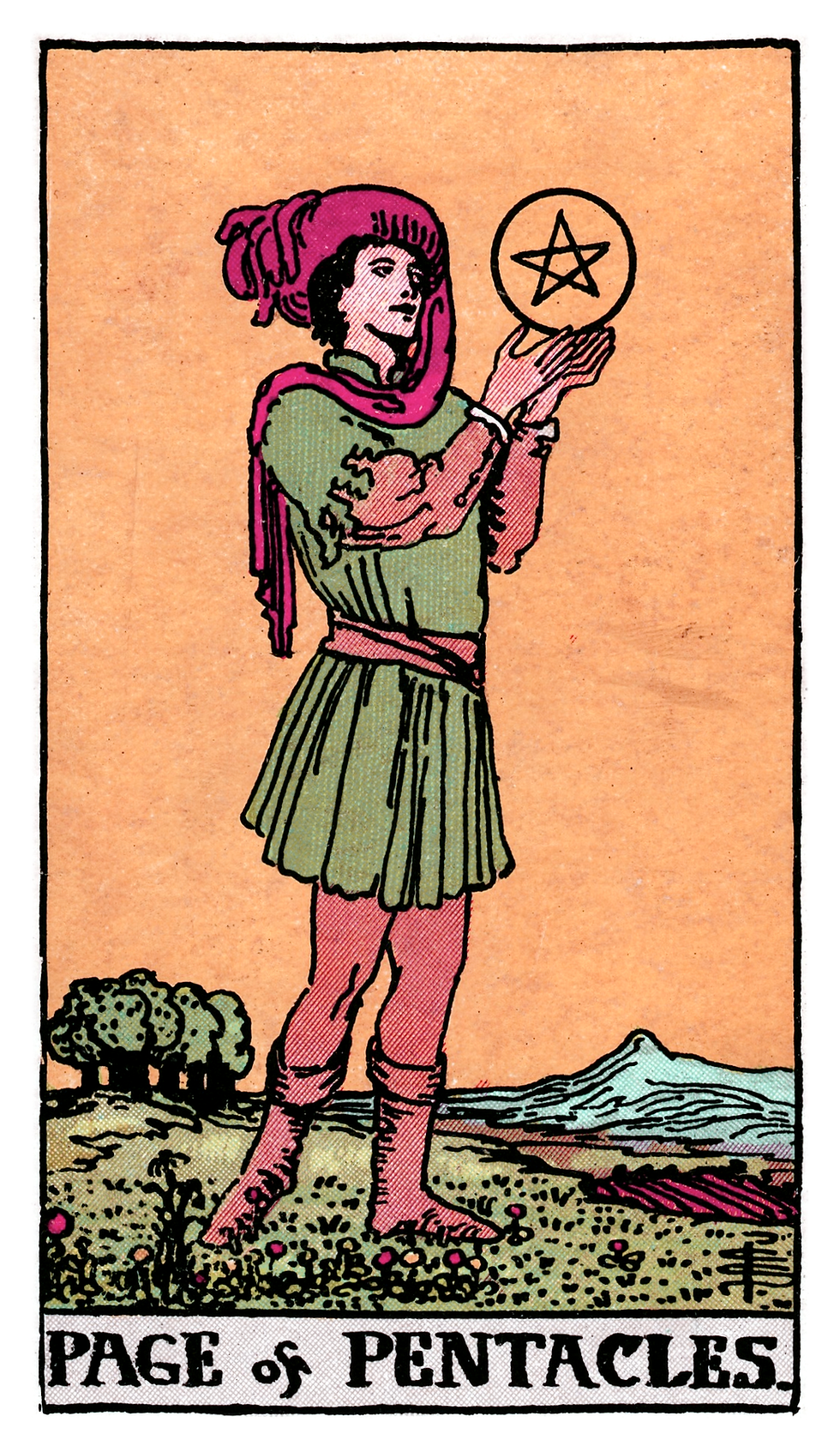
Page of Pentacles
Learning, curiosity, and practical beginnings.

Page of Cups
Tender messages, creativity, and emotional openness.

Page of Swords
Curiosity, observation, and truth-seeking communication.

Page of Wands
New inspiration, exploration, and creative courage.
More About
Pages often point to potential that is real but not yet proven. They can be an invitation to learn, practice, or experiment without demanding perfection. If a Page repeats, it may be highlighting a pattern of starting without committing—or it may be encouraging you to return to a beginner mindset so you can grow.
Conclusion
Pages represent learning and early engagement. They show curiosity, openness, and the willingness to explore a new energy through experience. When Pages appear, the message is often to stay curious, pay attention to what you’re being taught, and practice consistently so potential can become skill.
Editorial
These fields control how this item appears in lists (Snippet/Teaser) and in search engines (Meta Description). Visible only to Editors.
Snippet
A short line used when the surrounding context already explains what this is. Aim for a quick statement, not a full description.
Represent learning, curiosity, and early engagement with an experience.
Teaser
The default preview text for repeaters, browse pages, and internal search. Write 1–2 sentences that stand alone and make someone want to click.
Pages bring beginner energy: study, exploration, and small risks that build confidence. They can describe a person, a stance, or a phase of learning.
Meta Description
Used for search engines and social previews. Summarize the page in ~150–160 characters, include the key term naturally, and avoid quotes or line breaks.
Page meaning in tarot: a learner or beginner mode within each suit. Learn how Pages show curiosity, study, early efforts, and messages taking form.