
Overview
Summary
Court cards show roles and ways of expressing a suit, often through people or posture.
Main Points
A standard tarot deck contains 16 court cards.
Each suit includes four courts: Page, Knight, Queen, and King.
Court cards show roles and styles of expression, not stages of development.
They can describe a person, a stance, or how an energy is being handled.
Number of Cards
16
Card Attributes
=
=
Introduction
Court cards focus on how energy is expressed. Where numbered cards describe what is unfolding through stages, court cards describe the manner in which a situation is being approached—through attitude, behavior, perspective, and responsibility.
They can represent people, but they don’t have to. Often they describe a role someone is stepping into, a style that is shaping the situation, or a way of engaging that needs to be embodied, refined, or reconsidered.
About
People tend to fall into recognizable patterns of engagement: learning and observing, pursuing and acting, nurturing and integrating, leading and directing. Tarot reflects these patterns through the court cards, which form a symbolic system of roles and approaches within each suit.
Court cards are a parallel layer to the numbered cards. Rather than extending the Ace–Ten sequence, they translate experience into lived behavior—how someone carries an energy, expresses it, and takes responsibility for it.
Interpretation
What Court Cards Represent
Court cards represent approaches to life rather than events. They describe patterns of behavior, attitude, and engagement with the world. Instead of showing what is happening, they show how energy is being expressed.
They often map to four broad modes of expression:
Page: learning, curiosity, and early engagement
Knight: pursuit, action, and movement toward a goal
Queen: inner mastery, integration, and embodied understanding
King: outward mastery, direction, and responsible authority
These aren’t fixed personality labels. They can describe a person, a role, a stance, or a momentary style you’re being asked to adopt.
How Court Cards Function in a Reading
When a court card appears, it highlights the manner in which a situation is being approached. Depending on context, it may reflect:
an aspect of the querent that is active or seeking expression
an attitude or approach influencing the situation
a role that needs to be embodied, refined, or reconsidered
Court cards often shift the focus from action alone to style, maturity, and perspective. They ask not only what you’re doing, but how you’re doing it—and what that approach is creating.
Common Ways Court Cards Appear
Court cards commonly appear in three broad ways.
First, they may describe an aspect of the querent: a familiar trait, a strength, or a growing edge. Whether it feels supportive or challenging depends on the surrounding cards and the question.
Second, they may describe another person whose approach or influence is relevant. This doesn’t require guessing an identity; it’s often enough to recognize a pattern of behavior.
Third, they may describe the atmosphere of a situation. Relationships, workplaces, and environments can take on a recognizable character that mirrors a court card’s qualities, shaping how interactions unfold.
Organization and Structure
Court Ranks
Each suit contains four court cards: Page, Knight, Queen, and King. Together they describe a spectrum of expression—from learning and experimenting to acting, embodying, and leading.
Suit Flavor
The suit modifies the expression. A Queen of Cups and a Queen of Swords may share the same “Queen” signature, but the suit shifts what that mastery looks like: emotional attunement versus mental clarity, for example.
Explore the Court Cards by Rank
Explore the court ranks below to learn four distinct ways energy can be expressed. Pages show learning, Knights show pursuit, Queens show embodiment, and Kings show leadership and responsibility.

Pages
Represent learning, curiosity, and early engagement with an experience.

Knights
Represent action, pursuit, and active engagement with goals.

Queens
Represent inner mastery, integration, and mature understanding.

Kings
Represent leadership, responsibility, and outward authority.
Related Concepts
Court Cards and Numbered Cards
Court cards describe roles, approaches, and styles of engagement. Numbered cards describe stages of development—how a situation evolves through beginnings, growth, challenge, adjustment, and completion.
If numbered cards show what is unfolding, court cards show how it is being handled.
Explore Numbered Cards
Court cards describe approach and expression, but numbered cards describe the development of experience through stages. Explore Numbered Cards to read a situation as a process—how it begins, builds, shifts, and resolves.

Numbered Cards
Describe how situations develop through stages, from beginnings to completion.
Explore Ranks
Court cards are one half of the rank system in the Minor Arcana. Explore Ranks to see how stages (Ace through Ten) and expressions (Page through King) work together to describe both what is unfolding and how it’s being engaged.

Ranks
Describe how meanings progress within each suit, from beginnings through development to completion.
Explore the Cards
Explore the Court Cards
Browse the court cards below to see how each role expresses itself across all four suits. Comparing the same court rank across suits is a powerful way to learn the shared “rank signature” and how the suit changes its tone.
If this page does NOT have the 16 cards linked as a group, leave Explore Cards blank so it collapses, or use this authoring-only note:
This page describes the court-card framework. To explore meanings in depth, use the court ranks above and compare how each role shows up across the four suits.
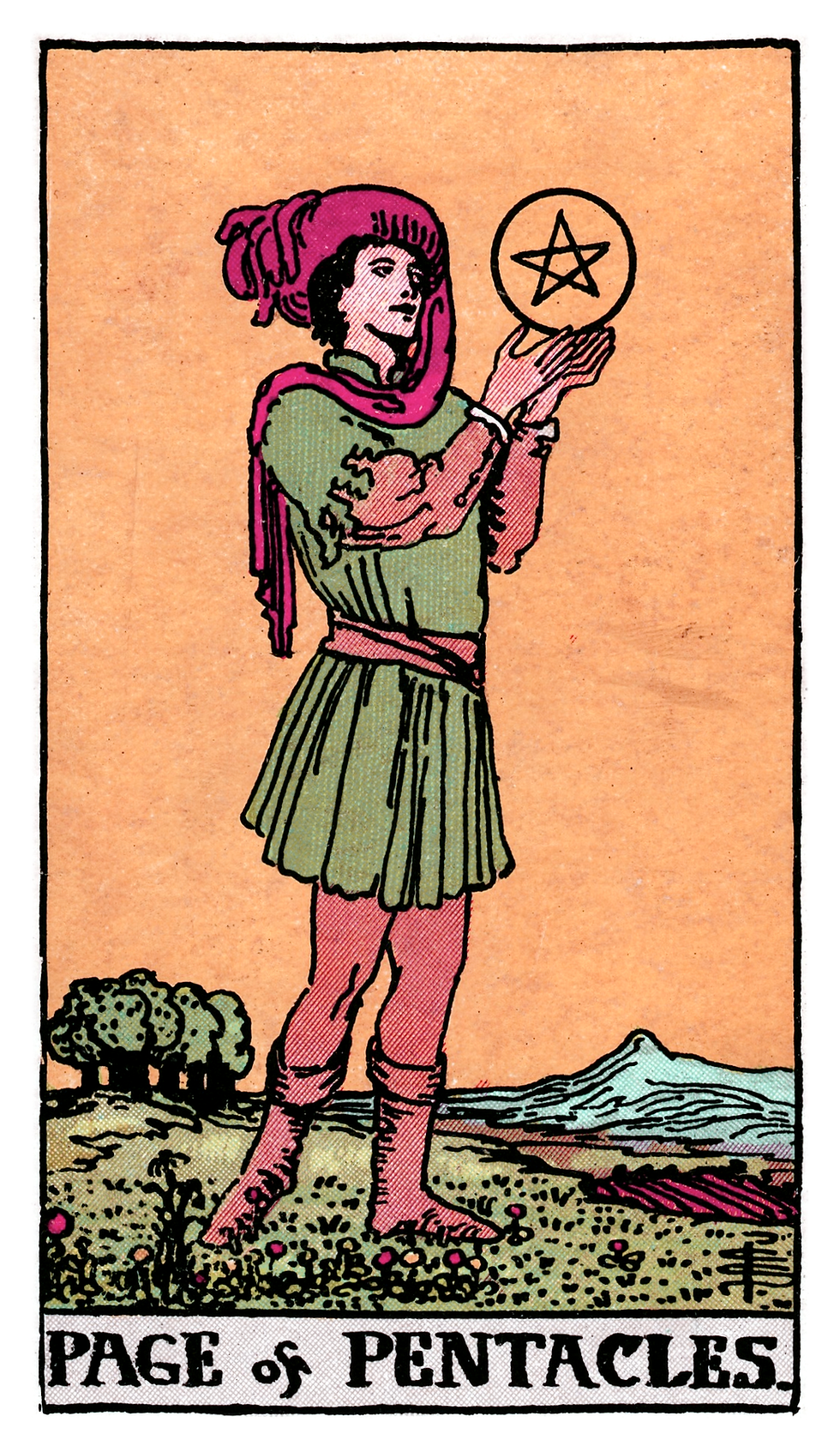
Page of Pentacles
Learning, curiosity, and practical beginnings.

Knight of Pentacles
Steady progress, responsibility, and follow-through.

Queen of Pentacles
Grounded care, resourcefulness, and practical abundance.

King of Pentacles
Stewardship, stability, and material leadership.

Page of Cups
Tender messages, creativity, and emotional openness.

Knight of Cups
Romantic pursuit, invitations, and heartfelt action.

Queen of Cups
Empathy, intuition, and emotionally steady support.

King of Cups
Emotional mastery, diplomacy, and calm integrity.

Page of Swords
Curiosity, observation, and truth-seeking communication.

Knight of Swords
Decisive action, conviction, and direct communication.

Queen of Swords
Discernment, clear boundaries, and honest clarity.

King of Swords
Principled logic, ethics, and strategic authority.

Page of Wands
New inspiration, exploration, and creative courage.

Knight of Wands
Bold pursuit, momentum, and passionate initiative.

Queen of Wands
Warm confidence, creativity, and magnetic leadership.

King of Wands
Visionary leadership, discipline, and purposeful action.
More About
Court cards become much clearer when you stop treating them as fixed personalities and start reading them as roles or stances. A court card can describe a person, but it can just as easily describe how someone is approaching the moment—curious, driven, discerning, protective, receptive, or authoritative. When you read court cards as “the way energy is being carried,” you can apply them to relationships, workplaces, creative projects, and inner dynamics without forcing a literal identity match.
Conclusion
Court cards describe how energy is expressed—through role, attitude, maturity, and approach. They help a reading move from “what is happening” to “how it’s being handled,” revealing the style and perspective shaping the situation. When combined with suit, court cards become a clear language for behavior and responsibility in everyday life.
Editorial
These fields control how this item appears in lists (Snippet/Teaser) and in search engines (Meta Description). Visible only to Editors.
Snippet
A short line used when the surrounding context already explains what this is. Aim for a quick statement, not a full description.
Describe how energy is expressed through roles, behavior, and personal approach.
Teaser
The default preview text for repeaters, browse pages, and internal search. Write 1–2 sentences that stand alone and make someone want to click.
Court cards can describe people, parts of you, or the stance a situation is asking for. Learn the courts to read expression, maturity, and style.
Meta Description
Used for search engines and social previews. Summarize the page in ~150–160 characters, include the key term naturally, and avoid quotes or line breaks.
Court cards meaning in tarot: Pages, Knights, Queens, and Kings as roles and modes of expression. Learn how courts describe people, posture, and tone.